
The Boston Symphony Orchestra's Real Crisis Has Nothing to Do with Andris Nelsons
No doubt you’ve heard what happened at the Boston Symphony Orchestra on Friday March 6, 2026, when the BSO board announced the end of Andris Nelsons’ tenure as music director.
Blindsided musicians and audiences have expressed their outrage. The press has dissected every detail it can get its hands on. And the board is defending a decision they haven’t yet fully explained.
I'm not here to weigh in on Nelsons’ contract. I'm interested in the bigger problem underneath it—the one the board is gesturing at when they use the phrase 'future vision.’
The trustees’ open letter points to “existential issues,” noting that the BSO has drawn more than $100 million from its reserves and is carrying $90 million in deferred maintenance. Expenses have climbed steadily—up 40% since 2014—and the organization has carried structural deficits for six of the past 14 years, according to their 990 filings.
But as some have pointed out, by conventional financial measures, the BSO is not in crisis. Its endowment stands at approximately $536 million, with total assets at around $680M. Its asset-to-liability ratio is healthy.
So what's the real crisis?
The real crisis is what the endowment is preserving: a traditional model that’s steadily losing its audience.
The evidence is buried in that same trustee letter: They report that BSO attendance has declined 40% over the past 20 years.
That’s a business model problem—and not the kind that mere tactics can fix.
Business leaders have spent the last two decades navigating exactly this dynamic—watching the digital revolution render legacy models obsolete almost overnight. They know the pattern. And they know what happens to institutions that wait too long to respond.
A large endowment doesn't just mask this problem—it insulates the organization from the urgency of solving it. The financial cushion removes the pressure to evolve.
Because the model continues to hold together financially, even as audiences decline, the underlying problem remains easy to misdiagnose. The signals point to programming, marketing, or leadership—rather than the value proposition itself.
When the resources that protect you from failure also protect you from change, inertia becomes the strategy.
That’s the deeper crisis, and it has nothing to do with who stands on the podium or what repertoire they conduct.
What demographic shifts reveal
The BSO’s audience decline isn’t unique. It’s a trend that has played out across the sector, and it began well before the pandemic. The NEA reports that the share of American adults attending classical music performances fell 25% between 2002 and 2017.
For decades, arts growth relied on lookalike targeting—finding more people who resembled your best, most loyal patrons. That model worked when the general population still looked like the audience the field originally built. That is no longer the case.
The historic arts audience now represents a shrinking share of the population. Today roughly half of Gen Z is non-white, a stark contrast to the baby boomers, of whom only about a third are non-white.
The country is growing. The audience isn’t.
Then there’s the age factor. Conventional wisdom says classical music audiences have always skewed older—and that younger patrons will come to it eventually. But the longitudinal data tells a different story. In 2017, IMPACTS Experience documented that orchestras were already losing audiences faster than they were replacing them. Eight years later, the replacement rate has actually gotten slightly worse.
The pipeline has not been refilling.
The data makes this concrete. According to IMPACTS Experience, every active symphony attendee who leaves the market is replaced by only 0.907 of a person.
What does this mean for audience size?
A symphony welcoming one million patrons today will welcome 907,000 in the next visitor engagement cycle. That’s 93,000 people gone, within three Tanglewood seasons. Then 822,600. Progressively fewer each cycle—even while serving their current audiences perfectly.
The numbers make the pattern visible. But they don’t explain it. Demographic shifts don’t cause audience decline. They expose when a value proposition no longer fits the population it serves.
The endowment buys time. It doesn’t buy relevance.
Every organization runs on a business model—the system that determines how it creates value for the people it serves, and how it sustains itself in the process.
The foundation of the entire business model is the value proposition. It answers the most important question a potential audience member asks: “Why should I care?”
The BSO's implicit value proposition—like most traditional arts organizations—has long been some version of: “You should care because we make excellent art.”
And for many years, that was enough—when attending the symphony was a cultural norm, a social expectation, a marker of a certain kind of life.
That world is gone.
This isn't an argument against excellence, and it's not an argument for changing the repertoire. The BSO's artistic standard is extraordinary and should remain so. The work isn’t to change the art. It’s to change how its value is understood and communicated in the context of people’s lives today.
Because audiences—especially those who haven't yet walked through the door—don't make decisions based on what you make (the product). They make decisions based on what it makes possible for them (the outcome). Relevance is the difference between 'world-class symphony performance’ and 'two hours where I feel less alone.'
When a value proposition is aligned with the world it lives in and the people it serves, it ties what you do to what those people actually need. When it's not aligned, everything built on top of it—the marketing, the programming, the fundraising—is fighting an uphill battle it cannot win.
No conductor—however brilliant, however civic-minded—can repair a value proposition problem. Because the value proposition doesn't live on the podium. It lives in the business model. Even a genuinely community-focused conductor gets shaped by what the business model incentivizes.
The BSO's strategic plan—programming, partnerships, and place—doesn’t shift the model. It’s a supply-side answer to a demand-side problem. The focus is on what to offer. The harder work is understanding what drives demand.
Audience development strategies have long assumed the barrier is awareness, representation, or access—people would come if they knew about it, if tickets were cheaper, or if they saw themselves reflected on stage.
Those efforts matter. But you can know about something, have access to it, and see yourself reflected in it—and still not feel like it’s for you. Relevance determines whether any of the other strategies actually work.
This flips the direction of audience development work. Instead of pushing great art outward and hoping it resonates, it starts with what people are seeking—and connects the art to that.
That’s demand-side strategy. And it's the work no conductor search can do.
The harder question
The traditional patron base continues to age out. And without a value proposition that speaks to what people actually need right now—not what their grandparents needed—the replacement rate will remain low and attendance will continue to contract, cycle after cycle.
The BSO has extraordinary assets. World-class musicians who care deeply. Symphony Hall. A large endowment. A brand built over 145 years.
The question worth asking right now isn't who should stand on that podium. It's how do we begin to build a new model for today’s world?
And the endowment can't buy the answer.
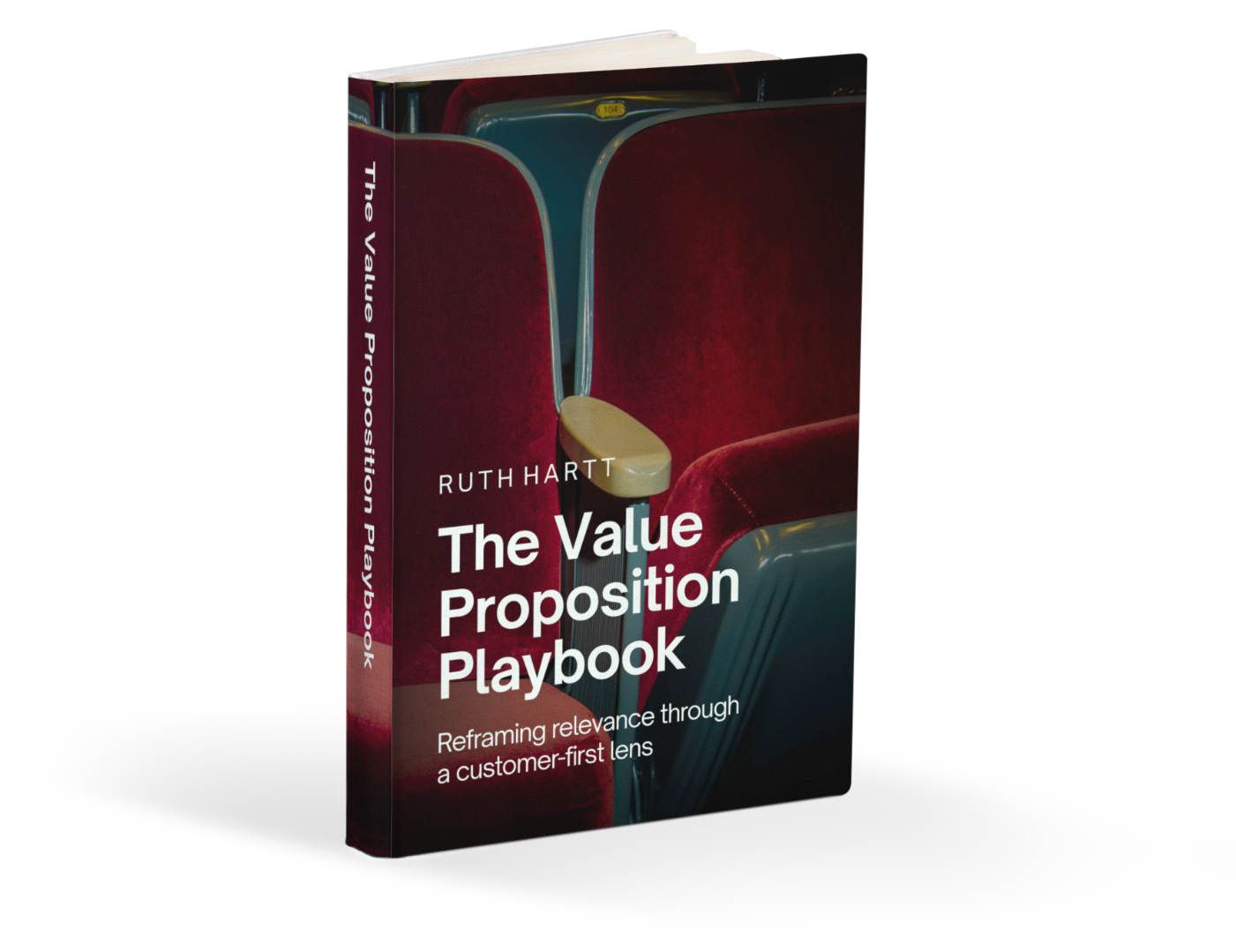
Reframe your value proposition around what audiences need
The Value Proposition Playbook offers a step-by-step guide to rebooting your organization’s relevance.
Related posts



Arts organizations aren't naturally resistant to change. But it feels that way, right? And it’s all too easy to assume that it’s a leadership problem. But it’s the model that creates inertia.